The culture driving UCLA women's basketball to back-to-back Final Fours
Every program has core values posted somewhere. A wall in the weight room. A graphic in the locker room. A laminated card in the practice facility. Most teams can recite them.
Very few actually live them, especially in the moments that matter most.
Down by eight at halftime of the Elite Eight. Season on the line. That's not when you read the poster. That's when you find out if the poster was ever real to begin with.
For UCLA women's basketball, the answer, two years running, has been YES.
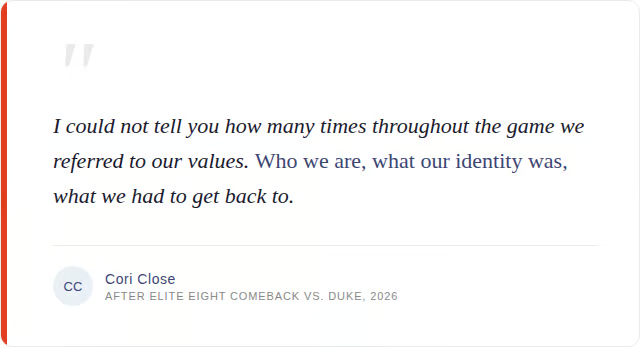
That's not a line from a preseason speech. Close said it after the Bruins clawed back from a halftime deficit to beat Duke 70-58 this past weekend in the 2026 Elite Eight, punching their ticket to a second consecutive Final Four. It's also not a coincidence that her players use nearly the same language when describing what happened in that locker room:
"When Cori came in, she was just super steady," senior forward Angela Dugalic said. "What she said is: how do we stick back to our values and stay neutral?"
Steady.
Values.
Stay neutral.
These aren't clichés for this team, they're operational. And as coaches, it's worth asking yourself:
What would it take for your team to reach that level of clarity in a pressure moment, instead of being overwhelmed by the moment?
Culture as an Infrastructure
Three years ago, UCLA didn't make the NCAA Tournament. Today, they're 35-1, undefeated in Big Ten regular season play for the second straight year, and preparing for a national championship run. That arc doesn't happen by accident, and it doesn't just happen because they happened to recruit the right players at the right time.
Close has spent 15 years building something specific at UCLA, a program with three core values at its center: a growth mindset, gratitude, and what she calls being lifestyle givers. Recruits who don't align with those values, regardless of talent, don't fit. As Close has put it plainly, if the only thing an athlete values is money, "this is not the right place."
That kind of clarity is rare. And it's exactly what allows culture to function as infrastructure rather than decoration. When the values are real, players don't need a coach to tell them what to do at halftime. They already know.
Accountability without the awkwardness
One of the hardest things to build on any team, at any level, is a culture where athletes hold each other accountable without it becoming personal. Most teams say they want it. Very few have actually built the conditions for it to happen.
UCLA has.
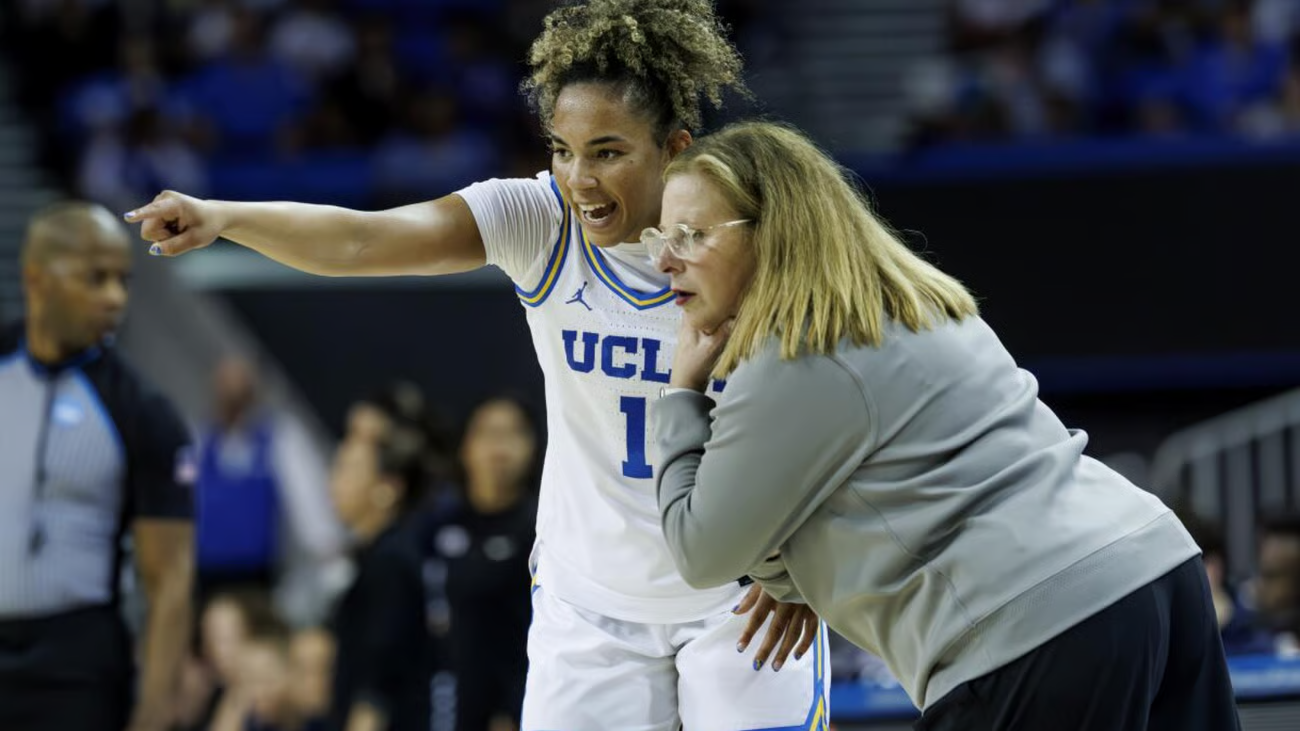
"We're able to call each other up and out on what we have to fix," Dugalic said. "No one takes it personally. If I need Lauren to do something better, she is willing to take accountability, and vice versa. That goes for everyone on the team."
That kind of peer accountability doesn't show up just because you have talented players. It shows up when trust has been built, when shared purpose has been established, and when the expectations are clear enough that addressing a gap feels like helping, not attacking. This is the exact work that gets skipped when coaches are under pressure to perform. It's also the exact work that makes performing under pressure possible.
The halftime that didn't need a speech
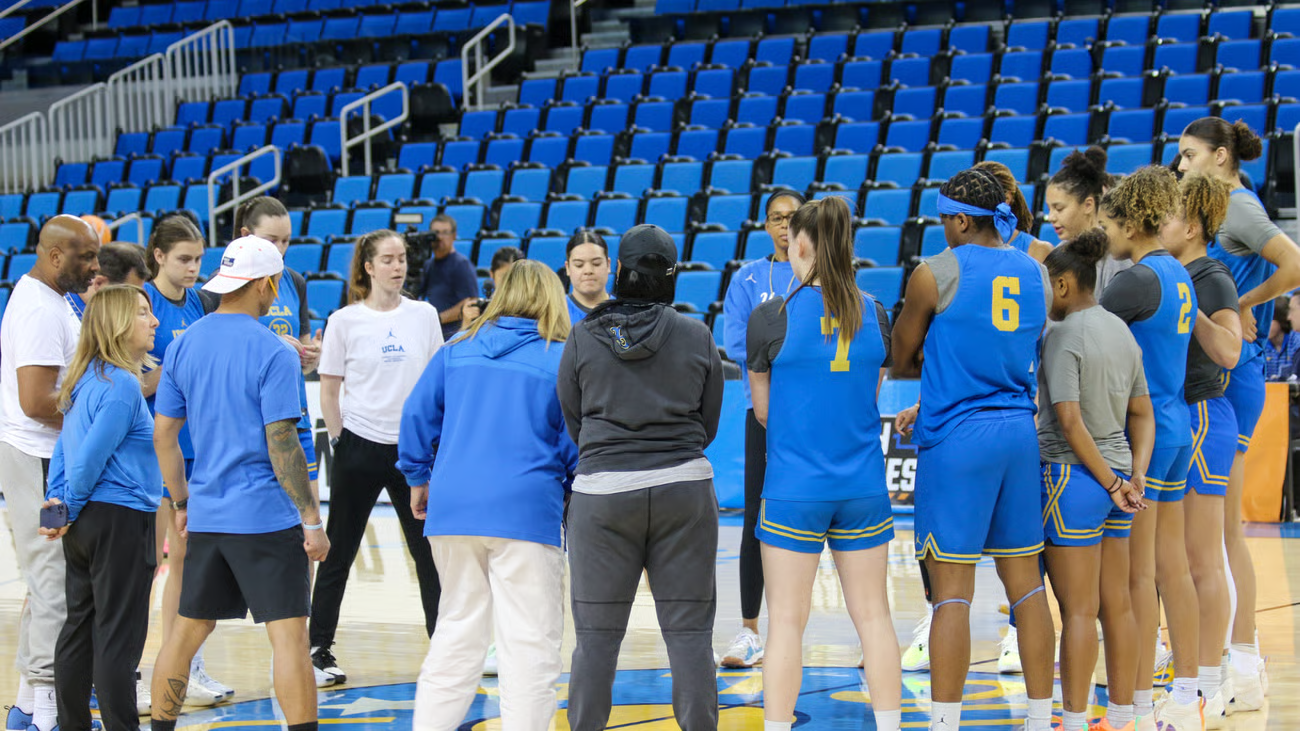
Perhaps the most telling detail from UCLA's Elite Eight win over Duke was what Cori Close didn't do at halftime.
She listened.
"I'll be like, 'okay, what have you guys talked about, what have we covered here?' And then I had like two or three things that I thought were important. But first, I listened,"
Close explained:
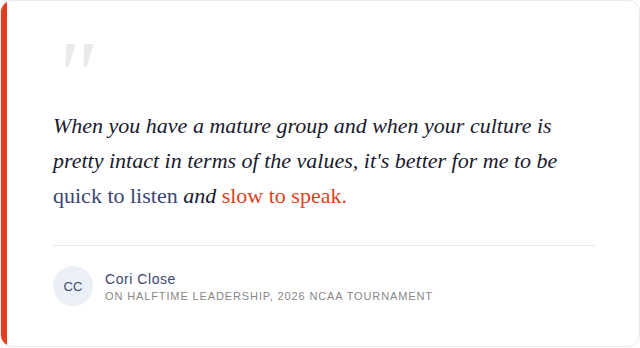
Lauren Betts, who went on to dominate the second half, had already processed what she needed to fix. The team had already identified their defensive breakdowns. Close came in and sharpened what was already there; she didn't have to create it from scratch. That's what a mature culture does. It produces athletes who are aligned, and empowered to lead, not just follow.
Adversity as a ticket
UCLA lost to UConn 85-51 in last year's Final Four. For many programs, a loss like that would create doubt, maybe even dysfunction. For this team, it became fuel.
Betts watched that game back nearly ten times. Close has cited the words of Tony Bennett, the former Virginia coach who won a national title just over a year after the most shocking upset in college basketball history: "Adversity, if used correctly, can buy you a ticket to a place that maybe you wouldn't have gone otherwise."
That reframing is a coaching skill. Turning pain into purpose, turning a blowout loss into a blueprint. It requires a team that trusts the process, believes in the vision, and, critically, doesn't leave when things get hard. Not a single UCLA player transferred after last year's Final Four loss.
That's not luck. That's culture.
The Bottom Line
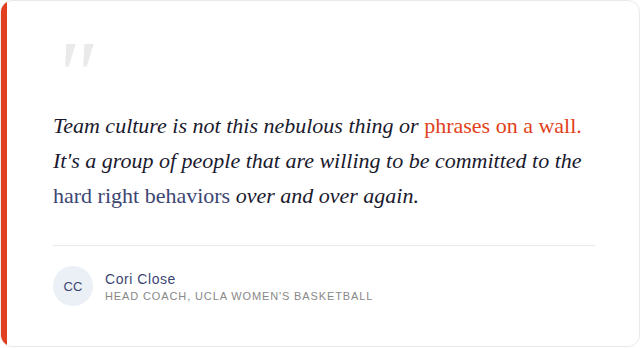
Here's something Close said that every coach at every level should sit with:
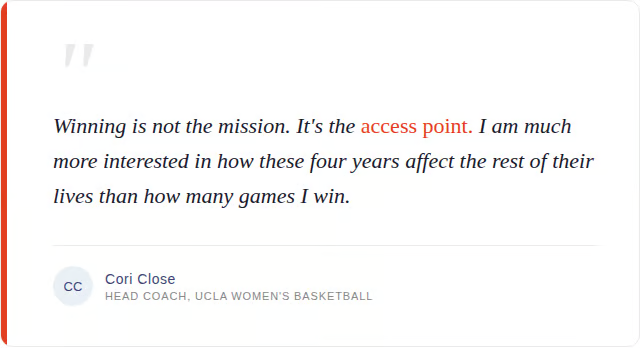
That's the kind of clarity that changes what you build, how you recruit, and what you're willing to sacrifice. When the championship trophy is the byproduct, not the goal, you build differently. You invest in things that don't show up on a box score. You trust that the internal work will produce the external results.
Right now, it's producing them at a historic pace.
Whether UCLA cuts down the nets in Phoenix or not, what Cori Close has built is already worth studying. The proof isn't just in the record. It's in the halftime locker room that didn't need a speech.
That's what real culture looks like.