What is Mental Performance Training?
The top athletes in the world all have something in common, they understand their mind is what sets them apart. Understanding this, these athletes are committed to training their minds consistently on top of what they do in the weight room and for their sport.
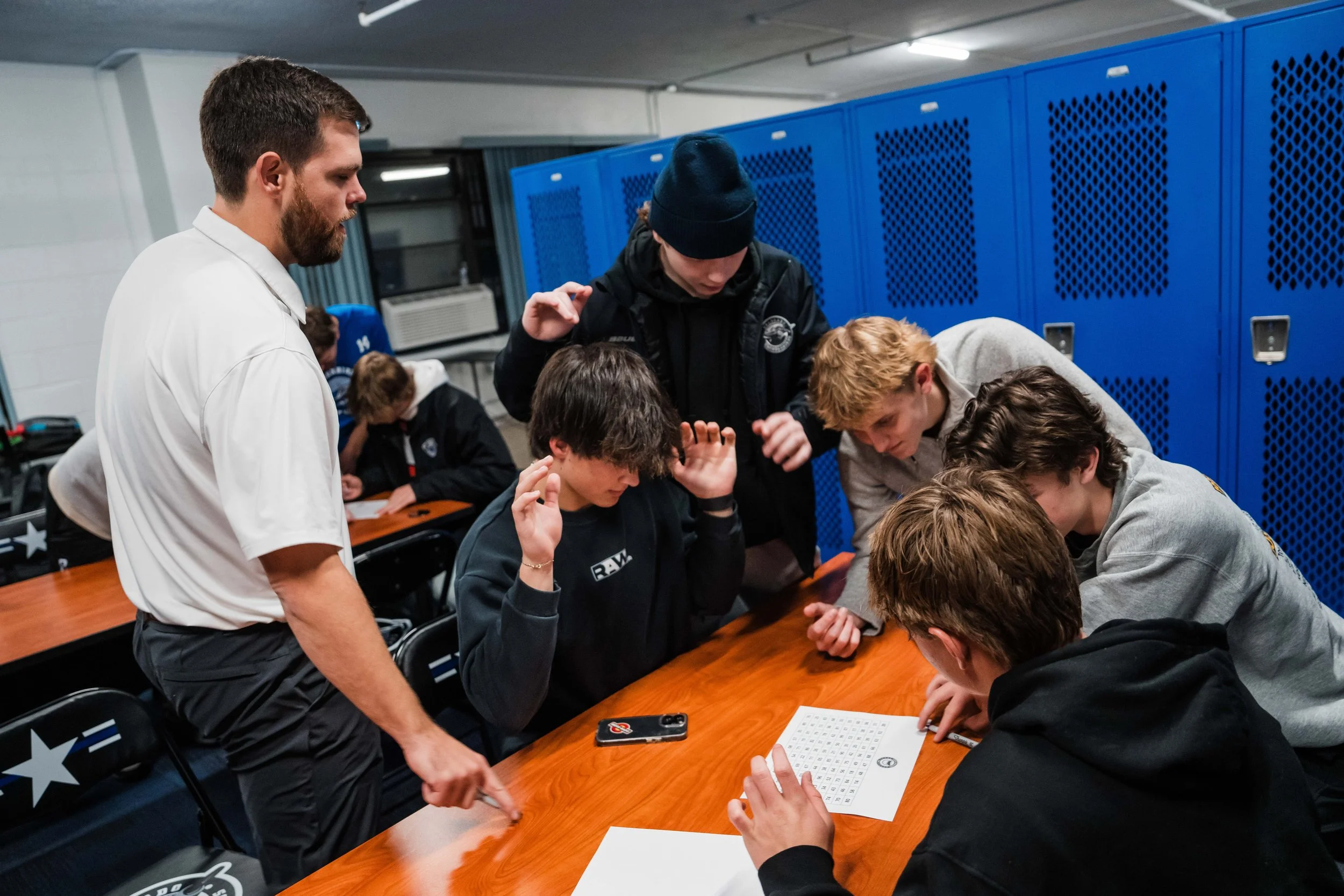
The correlation?
They are the ones playing professionally, committed to division 1 schools, and consistently performing at their best when the moments matter most.
Training their mind is not something they have to do. It’s something they look forward to doing and seek out ways to continue to get better because they realize the impact it has on them.
In this article, we take a closer look at what mental performance training is, how athletes, teams, and coaches train their minds, and the benefits of participating in a mental performance training program.
Mental Performance Training
Mental Performance Training is the systematic packaging of mental skills to elicit a specific type of performance or well-being benefit.
This type of training is most often done with athletes, teams, coaches, business professionals, performing artists, military, police, and first responders. The training can be done individually, with a team or group, and during professional development workshops.
Mental performance training can look different depending on many factors like returning from an injury or peaking for a championship. Because of that, special consideration needs to be taken about where to start when training the mind.

No matter where you are starting, mental performance training can help you strive for excellence in sports or at work and is crucial to improving your well-being.
Training the Mind Like the Body
Let’s take a moment to relate training the mind to training the body.

When working with athletes in the gym we ask them to do exercises like squat, lunge, bench press, or rows. After completing these exercises, they have an effect on the body that impacts an athlete's physical skills like strength, endurance, power, speed, and agility.
There is a parallel process to training your mind.
When working with athletes in the mind gym we ask them to do exercises like:
Meditation
Breathwork
Relaxation
Imagery
Perceptual cognitive skills
Reflection
Goal setting
After action reviews
Competition planning
Routine building
Self-talk
These exercises have an effect on the mind by increasing mental skills like self-confidence, motivation, self-awareness, attentional focus, and reducing stress.
Whether it’s the body or the mind. The ultimate outcome of training is for athletic performance, resilience, and well-being to be enhanced.
Building new habits is not easy, it’s hard work establishing routines. We don’t expect athletes to do this by themselves. The same way we give them support in the gym, we expect them to have support with training the mind.
Working with us is like having a trainer for your mind. We are skilled in developing plans that support athletes and teams in building the habits that lead to breakthrough performances that get you to the next level.
What are the benefits of Mental Performance Training?
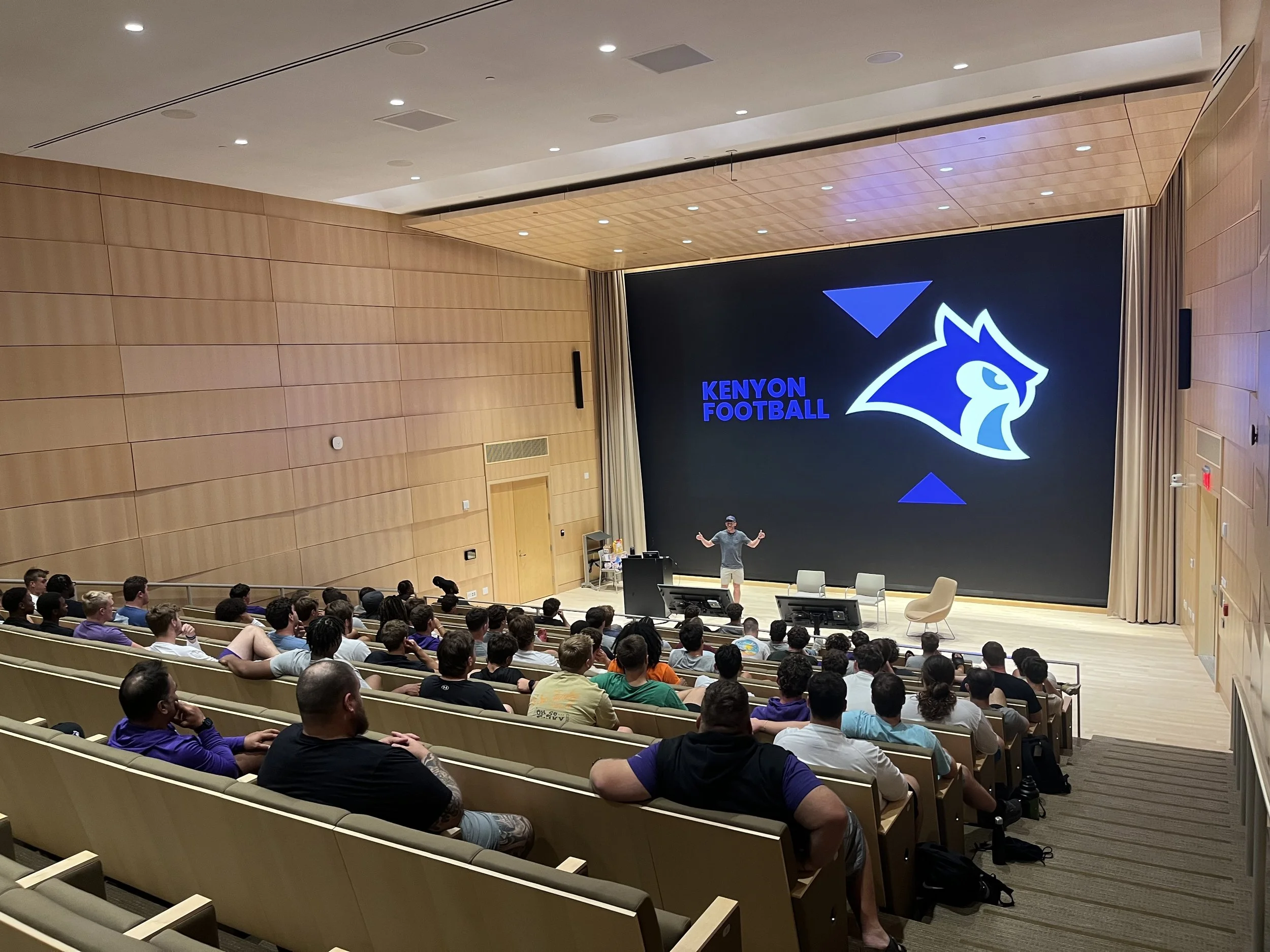
Mental Performance Training with a Division 3 football team
Mental performance training has clear impacts that support athletes, teams, and coaches reach their goals. At Fortitude, we have been lucky to work with athletes at all levels from Professional, NCAA Division 1, NCAA Division 3, Elite Club, High School, and Youth Sports.
A clear benefit that we have seen from mental performance training is an increase in winning percentage season after season. Furthermore, coaches have experiences a higher retention rate in their leaders.
Further, there is also clear scientific benefits from the research:
Athletes who engaged in mental performance training participated in their sports for longer periods and at higher levels (Myall et. al., 2022)
Psychological skills training has a positive effect on individual and team sports (Vealy, 2007; Weinberg & Gould, 2015, Weinberg & Williams, 2015)
Mental performance training helps athletes display more confidence, less pre-performance anxiety, and more emotional stability away from their sport (Ong & Griva, 2017, Hill et al. 2014, Patrick & Hrycaiko, 1998)
Conclusion
Mental performance training has clear benefits that impact an athletes day to day experience. From have a clearer vision of what to accomplish to consistently training the mind to be in the present moment, this type of training elicits real benefits like winning, improvement on the field, and increased well being.